



Samarkand in a minute
- One of the oldest cities in the world: more than 2,700 years of history, with the historic centre on the UNESCO World Heritage List.
- The capital of Amir Temur’s empire and the centre of the classic Uzbekistan route.
- Key sights — Registan, Gur-Emir, Bibi-Khanym, Shah-i-Zinda and Ulugh Beg Observatory.
- To see the highlights without rushing, allow 2 days; in 1 day you can cover the main sights in the centre.
- The best time is spring and autumn; in summer, sightseeing is planned for the morning and evening. Weather by month.
What to see in Samarkand
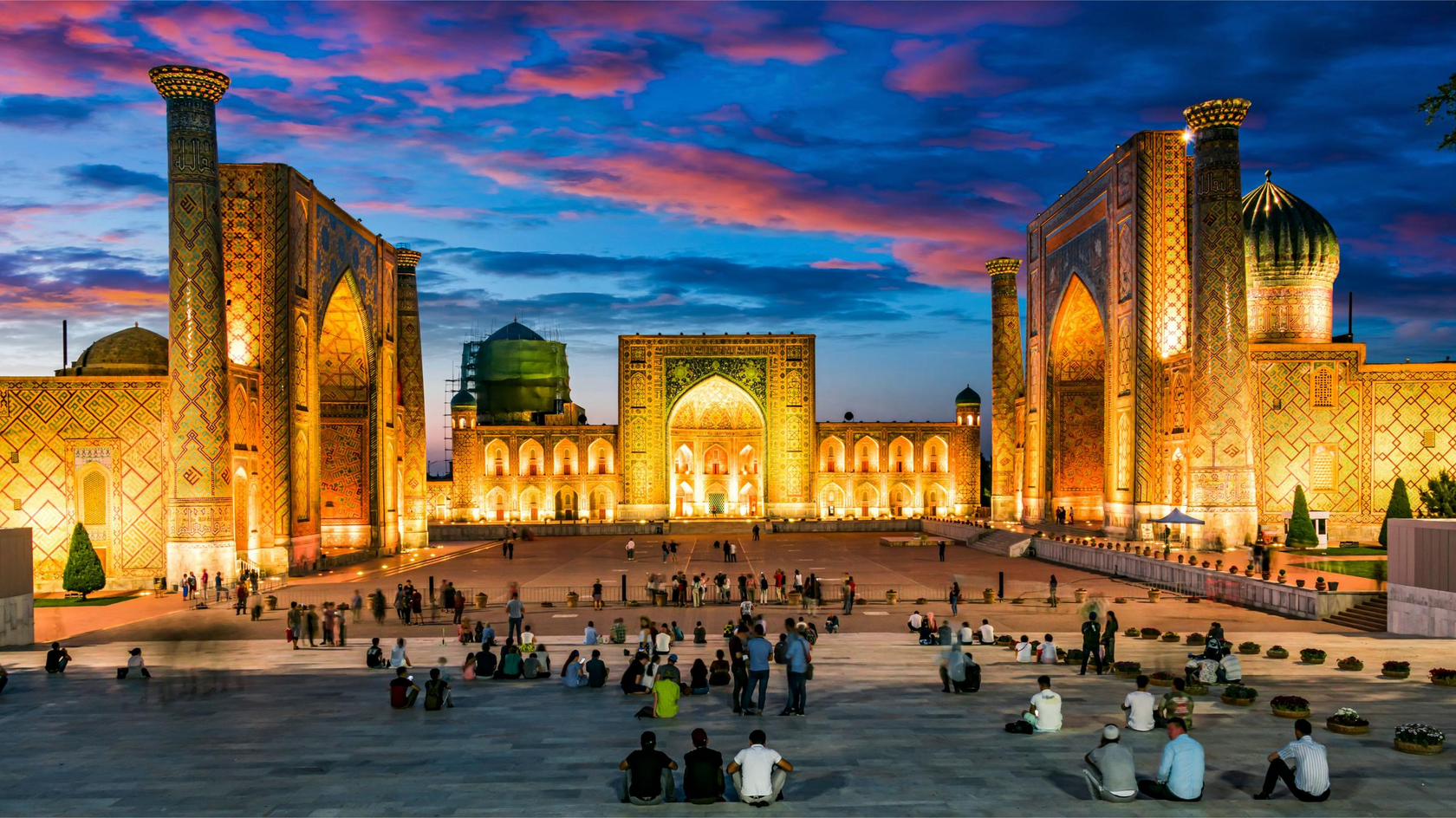
Registan SquareThe heart of the city: three madrasahs around one square1–1.5 hours · more →
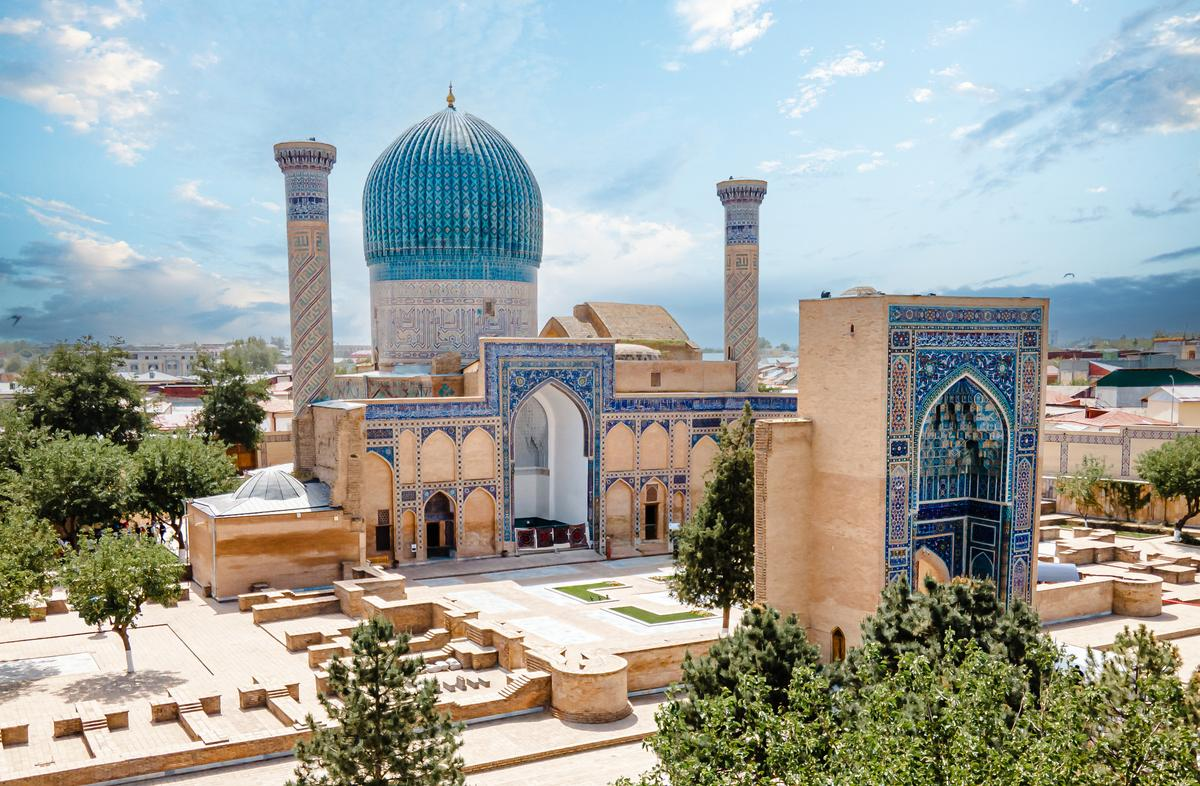
Gur-Emir MausoleumBurial place of Amir Temur and the Timurids30–45 minutes · more →
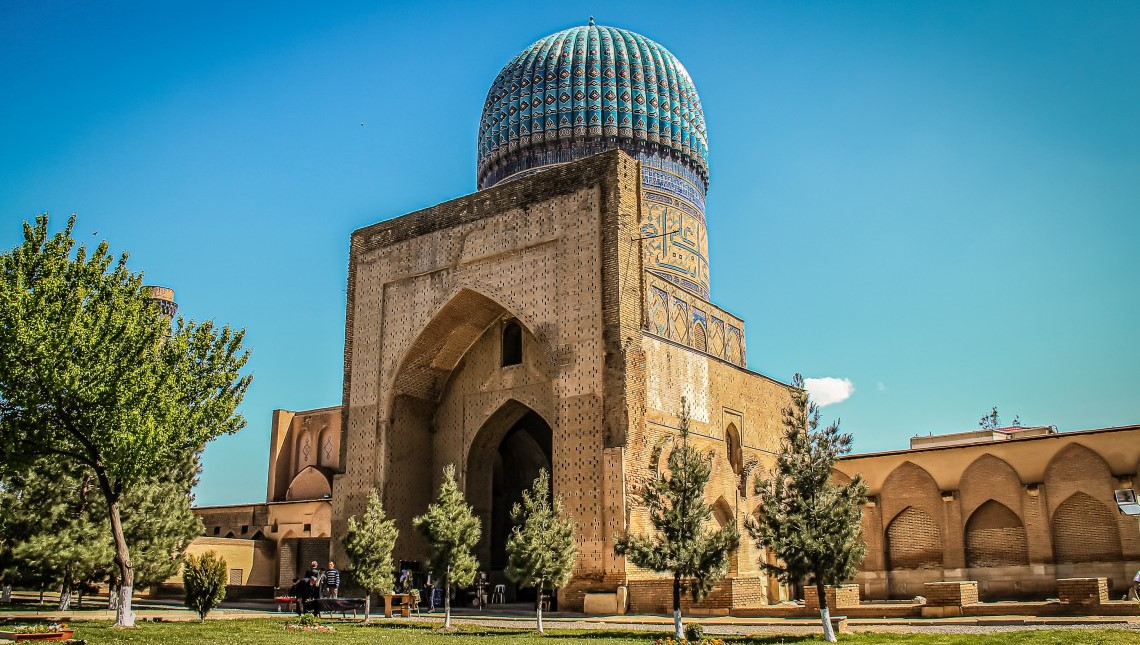
Bibi-Khanym MosqueThe most ambitious mosque of Temur’s era30–45 minutes · more →
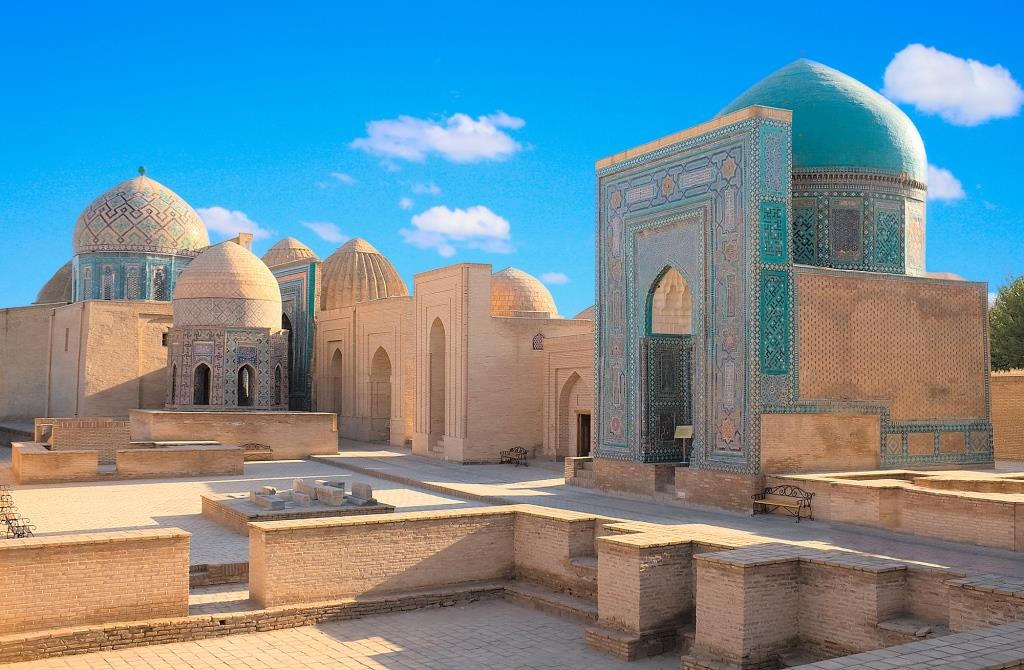
Shah-i-Zinda ensembleA street of mausoleums with exemplary ceramicsAbout an hour · more →
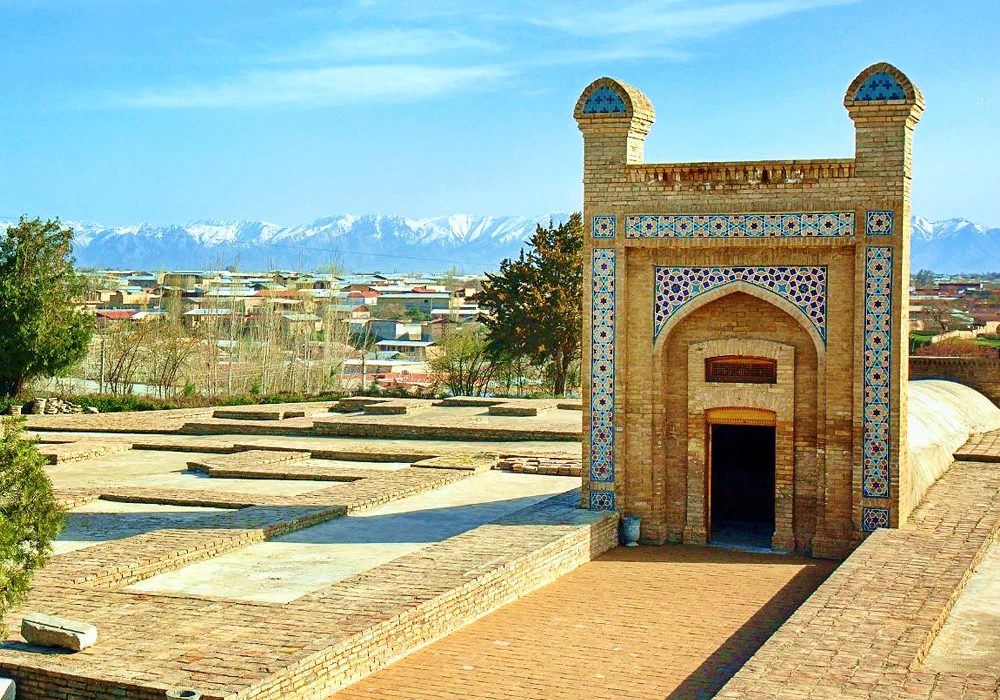
Ulugh Beg ObservatoryA 15th-century scientific centre and its stone sextant45 minutes – 1 hour · more →
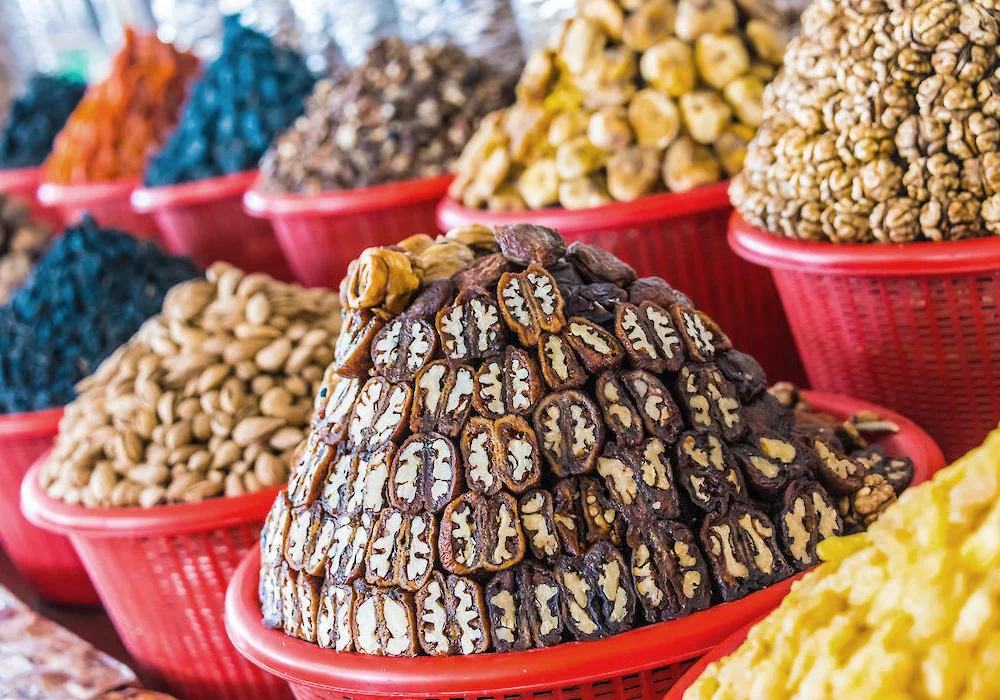
Siab BazaarThe city’s main market: bread, dried fruit, sweetsAbout an hour · more →
AfrasiabAncient Samarkand and the museum of Sogdian frescoesAbout an hour · more →
Konigil paper millSamarkand paper from mulberry bark at a water mill45 minutes – 1 hour · more →
Khoja Daniyar MausoleumA shrine of three faiths on the slope of Afrasiab30–40 minutes · more →
Also in Samarkand
- Eternal City ethnographic complex →A quarter of craft workshops, teahouses and restaurants at the Silk Road Samarkand tourist centre, where artisans work in front of visitors.
- Samarkand rowing canalThe only facility of its kind in Central Asia, with a waterside promenade next to the Eternal City.
Samarkand in 1 and 2 days
Day 1: highlights of the centre
- Gur-Emir
- Registan
- Bibi-Khanym
- Siab Bazaar
- Shah-i-Zinda
- In the evening — Registan again, illuminated
Day 2: science and crafts
- Ulugh Beg Observatory
- Konigil paper mill
- The Eternal City ethnographic complex at the Silk Road Samarkand resort
- Free time: walks, cafés, souvenirs
Tours that include Samarkand
Ancient Duet →From the Aral Sea to Samarkand →Classics of the East →Three Capitals of the East →Timur’s Path →The Great Silk Road →From West to East →
Read also: Wine and tastings · What to buy · Sharq Taronalari and other festivals · Nurata and Aydarkul · Crossing to Tajikistan