



Travel guide / Samarkand / Shah-i-Zinda
Shah-i-Zinda ensemble in Samarkand
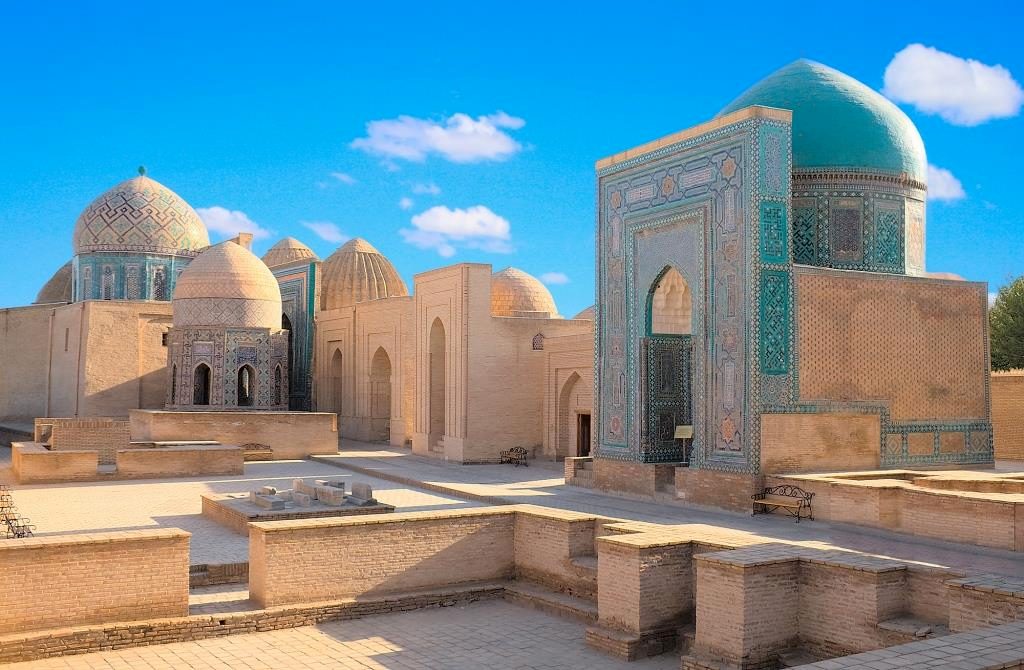
Shah-i-Zinda is an ensemble of mausoleums that grew from the 11th to the 19th century around the revered grave of Qusam ibn Abbas, cousin of the Prophet Muhammad; most of the mausoleums were built in the 14th–15th centuries. It is known above all for its unique architectural ceramics, a benchmark for Central Asian architecture.
History
The ensemble is linked to members of Samarkand’s ruling elite and religious figures. Each mausoleum reflects the artistic tastes of its time.
Famous for
The ornaments, colours and tiling techniques here are the finest examples of their time. Shah-i-Zinda feels like a gallery of eras: a walk through it is one of the most moving routes in the city.
How the ensemble is laid out
Shah-i-Zinda is a narrow street of tombs climbing the slope of Afrasiab hill. You enter through a portal built under Ulugh Beg in the 1430s. Beyond it the street falls into three groups of buildings: lower, middle and upper. The middle group holds the mausoleums of Timur's relatives and courtiers, among them the tombs of his sister Shirin Beka Aka and his niece Shadi Mulk Aka. At the very top is the oldest part of the ensemble, the complex of Kusam ibn Abbas with his venerated tomb.
The thing to look at closely is the carved glazed terracotta. The patterns are not painted on but carved into the clay and then glazed, so in raking light they stand out in relief. Each mausoleum has its own shade of blue, and walking up the street is like a lesson in several centuries of Samarkand ceramics.
Legends
The name means "the Living King". Tradition holds that Kusam ibn Abbas did not die but escaped his enemies into the underworld, where he lives to this day. Another local story belongs to the staircase at the entrance: count the steps on the way up and again on the way down, and if the numbers match, your sins are forgiven. Guides love to ask whose count came out the same; far from everyone's does.
Practical information
The ensemble is on the edge of Afrasiab hill, a 10–15 minute walk from Bibi-Khanym and Siab Bazaar, so it fits easily into the same morning. Allow an hour to an hour and a half and wear comfortable shoes: there are steps and old paving stones. This is an active pilgrimage site, so cover shoulders and knees; women may want a light scarf. Entry is by ticket, and we confirm current prices and opening hours before your trip. Next to it lies an old cemetery with a view across to the domes of Bibi-Khanym.
SÁTRA tip
Shah-i-Zinda is a place of pilgrimage, so cover your shoulders and knees; women will find a light scarf useful. Comfortable shoes are a must: there are many steps.
Where it fits in a trip
Shah-i-Zinda is part of our tours “Ancient Duet”, “From the Aral Sea to Samarkand”, “Classics of the East”, “Three Capitals of the East”, “Timur’s Path”, “The Great Silk Road”, “From West to East”, all of which include Samarkand, or build your own itinerary in the tour builder.
More in Samarkand
Travelling to Samarkand?
We will show you the city with a guide who knows every detail and plan an itinerary for your dates. Message our manager — we will answer your questions and find the right tour.
Fresh travel tips in our Telegram channel.