



Travel guide / Samarkand / Gur-Emir
Gur-Emir Mausoleum in Samarkand
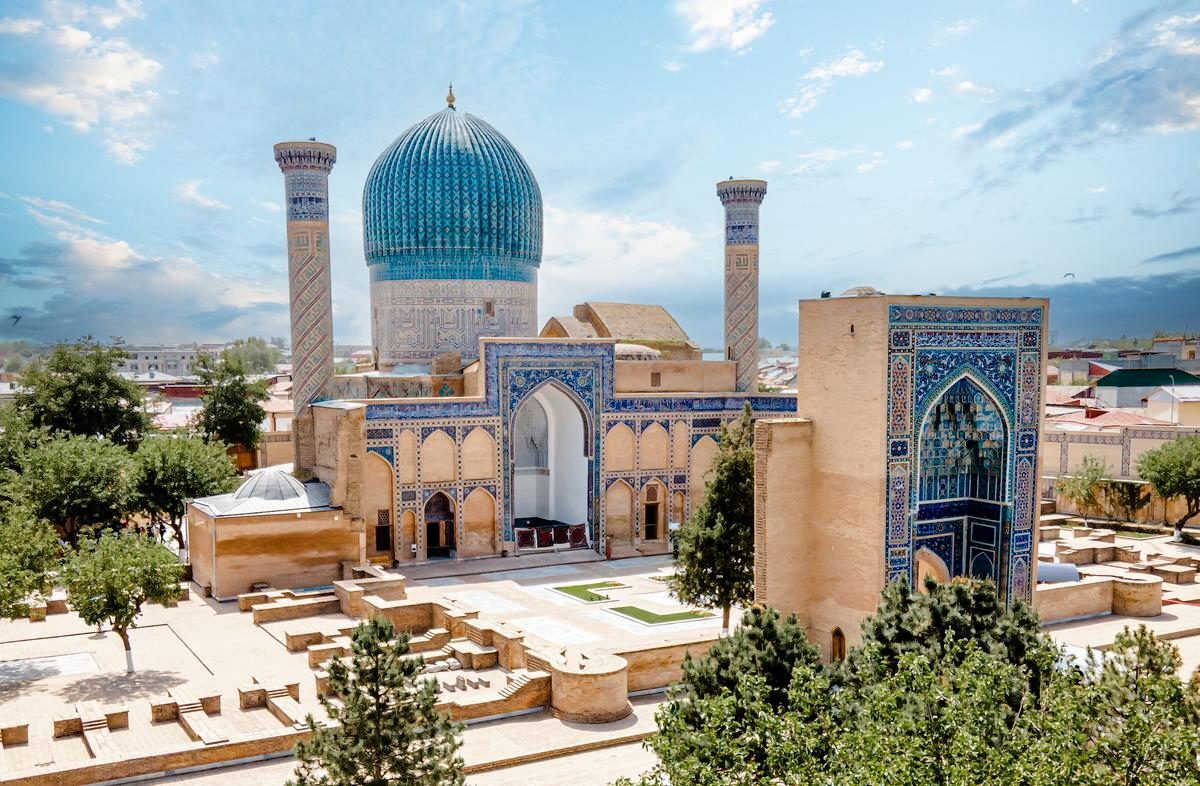
Gur-Emir is the tomb of Amir Temur and members of the Timurid dynasty, built in the early 15th century. The story of Samarkand in Temur’s era usually begins with this mausoleum.
History
The mausoleum was originally intended for Temur’s grandson Muhammad Sultan, but after the ruler’s own death it became his final resting place.
Architecture
Gur-Emir’s architecture is considered canonical for the Timurid style: the dome shapes and decorative techniques born here were later used in Samarkand, Herat and even in Mughal architecture in India. The interior stands out for its intricate ornament, marble finishes and rich colours.
What is inside
In the centre of the hall beneath the dome lies Timur's tombstone, carved from dark green jade, one of the largest pieces of jade in the world. Around it are the tombstones of his sons Shahrukh and Miranshah, his grandsons Muhammad Sultan and Ulugh Beg, and Timur's spiritual teacher Mir Sayyid Baraka. The stones in the hall are memorials: the actual burials lie in the crypt directly below.
Look up: the walls and dome are covered in painted decoration with gold, and the lower walls are lined with onyx panels. Outside, notice the ribbed turquoise dome, divided into more than sixty ribs, which looks different at every hour of the day.
The legend of Timur's tomb
In June 1941 an expedition that included the anthropologist Mikhail Gerasimov opened Timur's tomb. The study confirmed the lameness described in the chronicles, and Gerasimov reconstructed the ruler's face from his skull. A few days later war broke out, and so was born the legend of "Timur's curse" that people in Samarkand still tell today. The remains were reburied with Islamic rites at the end of 1942.
Practical information
Gur-e-Amir stands in a quiet quarter south-west of the Registan. Nearby are the small Rukhabad Mausoleum and the Timur monument on University Boulevard, all easy to combine in one walk. In the evening the mausoleum is lit up and looks especially solemn. Entry is by ticket, and we confirm current prices and opening hours before your trip.
SÁTRA tip
Start exploring Samarkand right here: Gur-Emir helps you understand the era without which neither the Registan nor Bibi-Khanym make full sense.
Where it fits in a trip
Gur-Emir is part of our tours “Ancient Duet”, “From the Aral Sea to Samarkand”, “Classics of the East”, “Three Capitals of the East”, “Timur’s Path”, “The Great Silk Road”, “From West to East”, all of which include Samarkand, or build your own itinerary in the tour builder.
More in Samarkand
Travelling to Samarkand?
We will show you the city with a guide who knows every detail and plan an itinerary for your dates. Message our manager — we will answer your questions and find the right tour.
Fresh travel tips in our Telegram channel.