



Travel guide / Samarkand / Afrasiab
Afrasiab: the ancient city and its museum
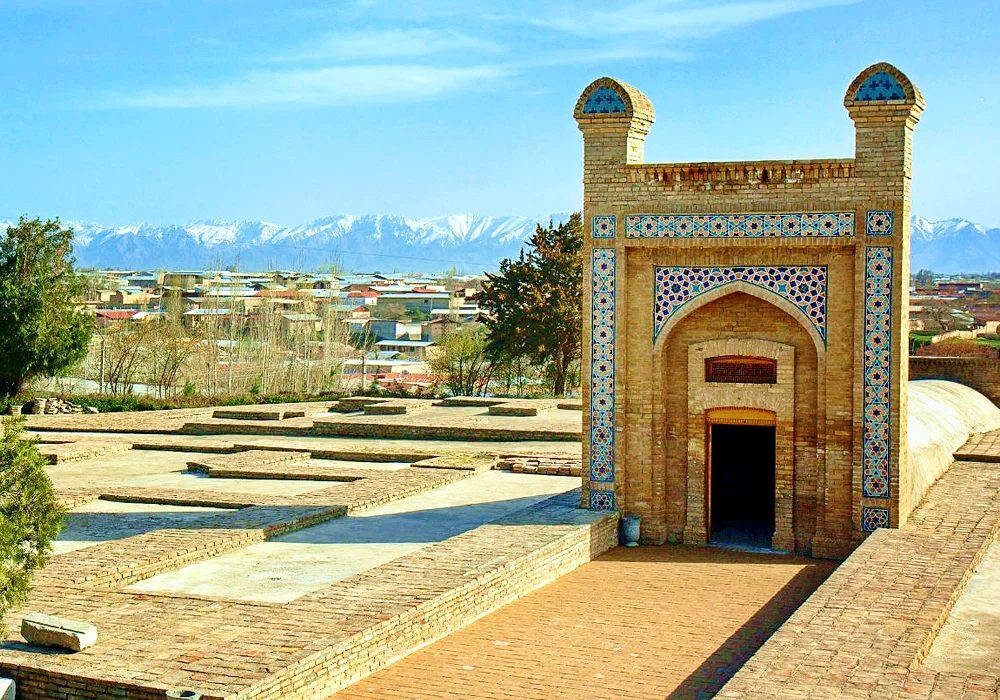
Afrasiab is Samarkand before Samarkand. On these hills stood Marakanda, taken by Alexander the Great in 329 BC, and this is where the city lived for more than fifteen centuries until the Mongols destroyed it. Today it holds a museum with the finest Sogdian frescoes in Central Asia.
A city that is no longer there
The site covers more than two hundred hectares north-east of the centre. Today it is grassy hills with excavation pits and remnants of walls, and it takes imagination to picture the capital of Sogdiana here with its palaces, temples and bazaars. The city survived the Greeks, the Hephthalites, the Arab conquest and its heyday under the Samanids, and was destroyed by the armies of Genghis Khan in 1220. Timur's new Samarkand grew further south, so the ancient hill was left untouched, and archaeologists inherited whole quarters.
The museum and the frescoes
The main reason to come is the museum at the foot of the hill. In 1965, during road construction, a 7th-century palace with wall paintings was found here. The most famous, the "Hall of the Ambassadors", shows the Sogdian ruler Varkhuman receiving envoys from China, Korea and other lands. It is an extremely rare record of Silk Road diplomacy, and the survival of the colours after thirteen centuries is astonishing. Alongside are ceramics, ossuaries, coins and models of the city.
What else to look for
Right by the site is the Khoja Daniyar Mausoleum, a pilgrimage place for three religions, and the Ulugh Beg Observatory stands on the neighbouring hill. All three are easy to see in one morning. Archaeologists still work at Afrasiab, and in season you can watch the digs.
Practical information
The site is in the north-east of Samarkand, 10–15 minutes by car from the Registan. Allow 40–60 minutes for the museum and another half hour for a walk over the hills. There is no shade or paving up there, so bring comfortable shoes and water. The museum is entered by ticket; we confirm current prices and opening hours before your trip.
SÁTRA tip
Visit the museum with a guide: without the story of Varkhuman and his guests the "Hall of the Ambassadors" looks like a faded wall, and with it, like the first page of Samarkand's history.
Where it fits in a trip
Afrasiab can be added to the Samarkand days of our tours “Ancient Duet”, “From the Aral Sea to Samarkand”, “Classics of the East”, “Three Capitals of the East”, “Timur’s Path”, “The Great Silk Road”, “From West to East”, all of which include Samarkand, or build your own itinerary in the tour builder.
More in Samarkand
Travelling to Samarkand?
We will show you the city with a guide who knows every detail and plan an itinerary for your dates. Message our manager — we will answer your questions and find the right tour.
Fresh travel tips in our Telegram channel.