



Travel guide / Bukhara / Chashma-Ayub Mausoleum
Chashma-Ayub in Bukhara: the “Spring of Job” and the Museum of Water
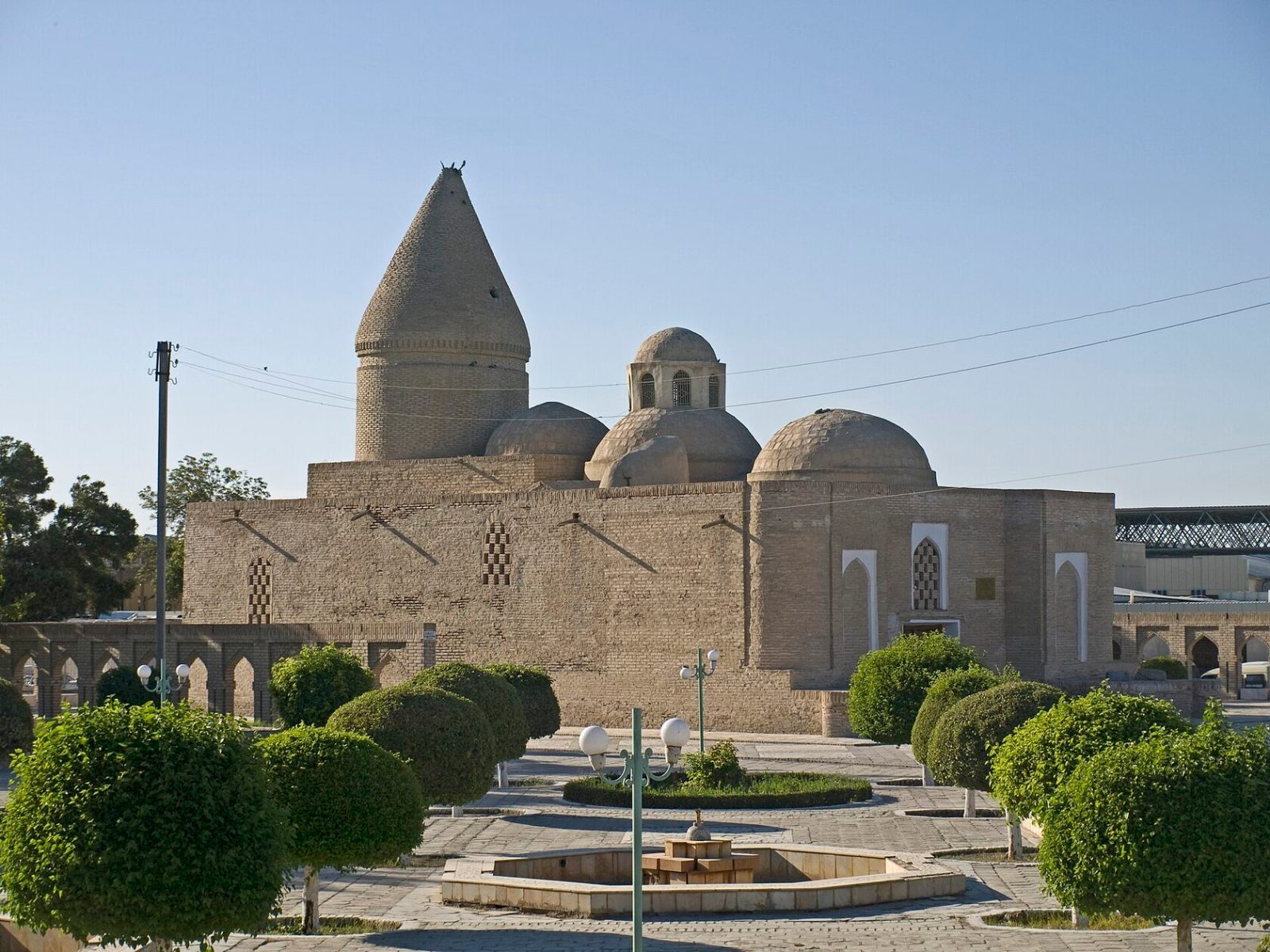
In the park next to the Samanid Mausoleum stands a building with a conical dome unusual for Bukhara: Chashma-Ayub, the “Spring of Job”. According to legend the prophet Ayub struck the ground with his staff and a spring of healing water appeared in a parched place. A mausoleum was raised over the spring in the 12th century, and the building took its present form under Timur. Today it houses a small Museum of Water.
The legend of the spring
The story of Job, tested by illness and loss, is told in both the Bible and the Quran. Bukhara tradition says he came here during a drought and gave the people water. The spring inside the mausoleum still flows, and many pilgrims fill bottles from it: the water is believed to help with skin ailments.
Architecture
Chashma-Ayub was built in several stages. The oldest part dates from the 12th century, the Karakhanid era. In 1380, under Timur, a hall with a conical dome on a tall drum was raised over the spring. Such domes are typical of Khorezm rather than Bukhara; they are thought to be the work of craftsmen Timur brought from Urgench. In the 16th century more rooms were added, and the building ended up with four domes of different shapes, a rare case of one structure showing three eras at once.
The Museum of Water
Inside is an exhibition on the history of Bukhara’s water supply: ponds, underground channels, water carriers, old jars and tools. For a city in an oasis that lived for centuries on water brought from afar, this is a central theme, and the museum explains why ponds were the heart of every quarter.
Practical information
The mausoleum stands in Samanid Park, two minutes’ walk from the Samanid Mausoleum and five from Bolo-Hauz and the Ark. Entry is ticketed; we confirm the price before your trip. It is cool inside even in summer; dress as for any shrine, with shoulders and knees covered.
SÁTRA tip
Come here straight after the Samanid Mausoleum: after its brick austerity, the conical dome of Chashma-Ayub and the story of water feel like the answer to how such a city came to exist in the desert.
Where it fits in a trip
Chashma-Ayub is part of the morning walk in Bukhara on our tours “Ancient Duet”, “From the Aral Sea to Samarkand”, “Classics of the East”, “Three Capitals of the East”, “Timur’s Path”, “The Great Silk Road”, “From West to East”, or build your own itinerary in the tour builder.
More in Bukhara
Travelling to Bukhara?
We will show you the city with a guide who knows every detail and plan an itinerary for your dates. Message our manager — we will answer your questions and find the right tour.
Fresh travel tips in our Telegram channel.