
Most guests see Tashkent through the window of an airport transfer: land in the evening, morning train to Samarkand. We live in this city, and every time we feel a little hurt on its behalf. Here is why the capital deserves at least two days.
Tashkent is more than two thousand years old, yet it looks younger than any other city in Uzbekistan. After the 1966 earthquake the centre was rebuilt almost from scratch, so 16th-century madrasas stand next to bold Soviet modernism and the glass towers of recent years. Add green avenues, plane trees, fountains and food that people fly in for.
Our Tashkent travel guide has 1 and 2 day routes. Here are nine reasons to stay in the capital rather than pass through.
9 reasons to stay in Tashkent
1. The Centre for Islamic Civilization
Opened in 2026 · next to the Hazrati Imam complex
The biggest opening of recent years. A 65-metre dome, four 34-metre portals and an exhibition on the history of this land from antiquity to today. The centre's greatest treasure is the Uthman Quran, one of the oldest surviving Quran manuscripts in the world. It has been on UNESCO's Memory of the World register since 1997, and in November 2025 it was moved here from the Muyi Muborak Madrasa to a dedicated hall.
The centre stands right next to the old Hazrati Imam (Khast Imam) complex, so see them together: the 16th century first, then the 21st.
2. The old town and its mahallas
Around Hazrati Imam and Chorsu · in the morning
Behind the wide avenues hides another Tashkent: clay walls, shady courtyards under grapevines, neighbourhood mosques where everyone knows everyone. Mornings begin with the smell of bread from the tandoor, and a guest is almost always invited in for tea. It is the best way to see how the city really lives.
3. Chorsu Bazaar
Under the blue dome · before lunch
The country's most famous bazaar, and its great dome is recognisable from any photo. Inside are mountains of spices, dried fruit, nuts and sweets, with meat and dairy halls nearby, and outside in the food rows they cook plov, shashlik and shurpa.
4. A metro you can photograph
Opened in 1977 · any time
Every station of the Tashkent metro has its own design: marble, granite, carved plaster, mosaics and chandeliers. Kosmonavtlar is dedicated to space, and Alisher Navoi looks like a palace hall. For a long time the metro was treated as a sensitive site and photography was banned. The ban was lifted in 2018, and it is now one of the most photogenic routes in the city.
5. Tashkent modernism
1960s–1980s · city centre
After the 1966 earthquake Tashkent became an experimental ground for architects. They looked for a way to combine concrete with oriental ornament, and found it in the panjara, an openwork screen that shades the façade from the sun. You will recognise it on the Hotel Uzbekistan on Amir Timur Square and on the State Museum of History of Uzbekistan.
The history museum has recently reopened after a major restoration. Architecture lovers should also see the Istiklol Palace (the former Palace of Friendship of Peoples), the dome of the state circus and the Courage memorial, dedicated to the rebuilding of the city after the earthquake.
6. The Romanov Palace
1891 · in the centre, near Amir Timur Square
The mansion of Grand Duke Nikolai Konstantinovich, exiled to Turkestan. He did a great deal for the city, including irrigation of the surrounding land, and his palace is considered one of the most beautiful buildings of pre-revolutionary Tashkent. It is closed to visitors, but the façade and railings are worth seeing.
7. Museum of Applied Arts
Late 19th century · the former Polovtsov house
A small mansion that masters from Tashkent, Bukhara, Samarkand and Fergana decorated with carved plaster, painted ceilings and wood. It is a rare place to see the work of the country's best craftsmen in a single house, along with a collection of suzani, ceramics and jewellery.
8. Amir Timur Square and Tashkent City
City centre · in the evening
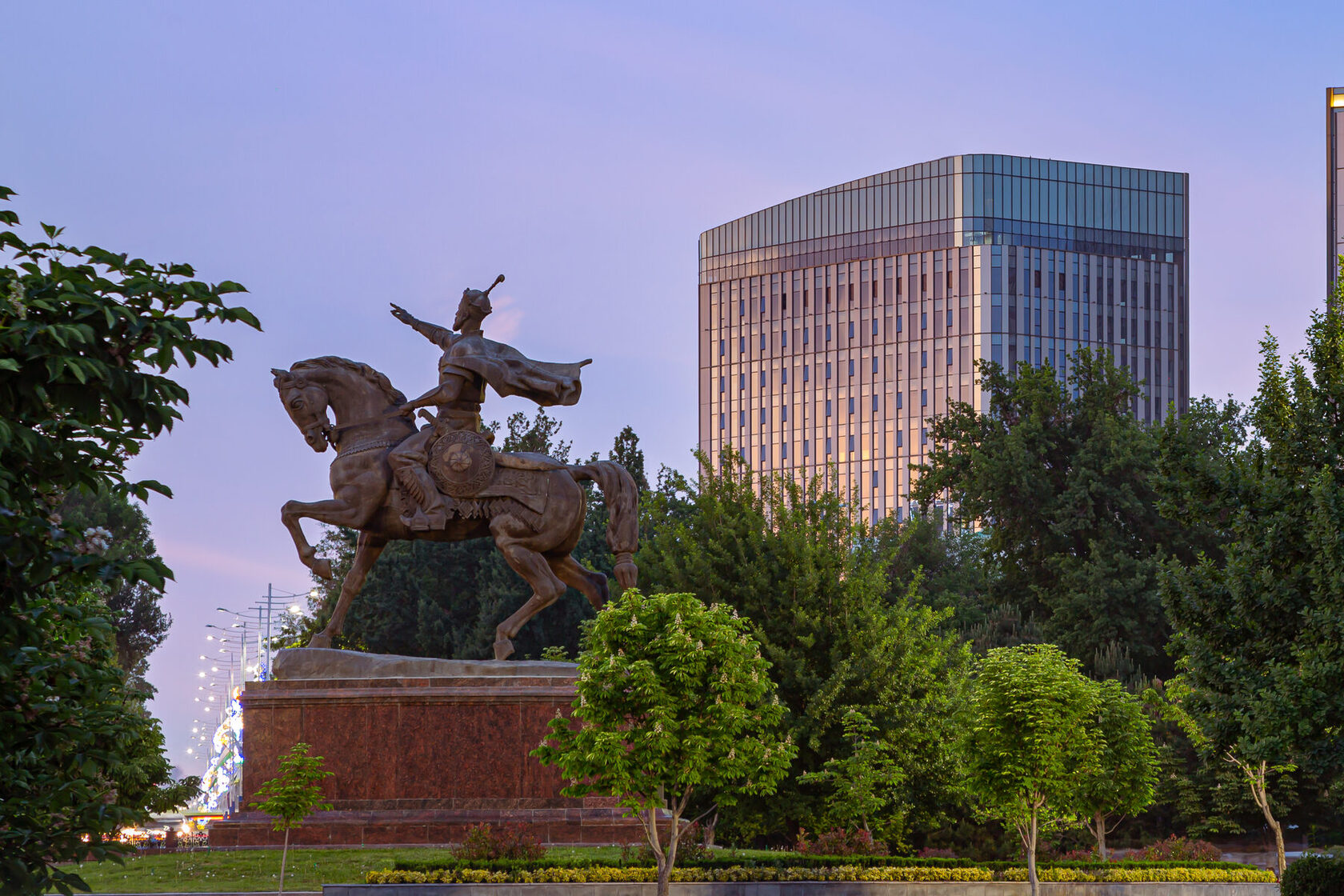
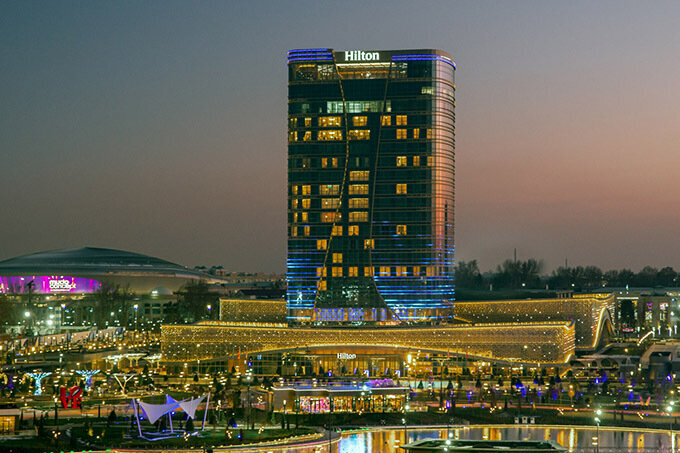
The square with the equestrian statue of Amir Timur is the starting point of modern Tashkent. A few minutes away is Tashkent City Park, with dancing fountains, restaurants and the towers of the business district. In the evening the whole city walks here. To see Tashkent from above, go up the 375-metre TV tower: its observation deck and restaurant are at around 100 metres.
9. Mountains an hour away
Chimgan, Charvak, Amirsoy · a full day
Few capitals have mountains this close. The drive to the Charvak reservoir and the Chimgan and Amirsoy resorts takes about an hour and a half. In summer it is cooler than the city; in winter the ski slopes are open. Our Tashkent and the Mountains programme is built for exactly this.
Practical tips before you go
Getting there. Tashkent International Airport has direct flights from many countries. From Tashkent, the Afrosiyob high-speed train takes about two hours to Samarkand and about four to Bukhara.
When to go. Spring, when the city is in bloom, and autumn with its soft sunshine. In summer it can reach 40°C, so we plan the day around the morning and evening.
How many days. At least two: one for the old town, Chorsu and the metro, the second for modernism, museums and the evening centre. A third day for the mountains.
Getting around. The metro is easy and cheap, and taxis are ordered through apps such as Yandex Go. With our guests we use our own vehicles with drivers, so no time is lost waiting.
Where to stay. Near Amir Timur Square or Tashkent City if you want to walk in the evening; see our hotels page for the properties we work with.
How we show Tashkent
Tashkent is our home. We show it the way we would show it to friends: the old town and tea in a mahalla courtyard in the morning, the metro and modernism in the afternoon, and dinner in the evening where locals actually eat. And we always leave time simply to walk under the plane trees.
Tashkent is part of all our Uzbekistan itineraries, and it shows best in Three Capitals of the East and Tashkent and the Mountains. Any of them can be tailored to your dates and pace. Hungry already? Start with our guide to Uzbek dishes to try.
