



Travel guide / Fergana Valley / Yodgorlik factory
Yodgorlik silk factory in Margilan
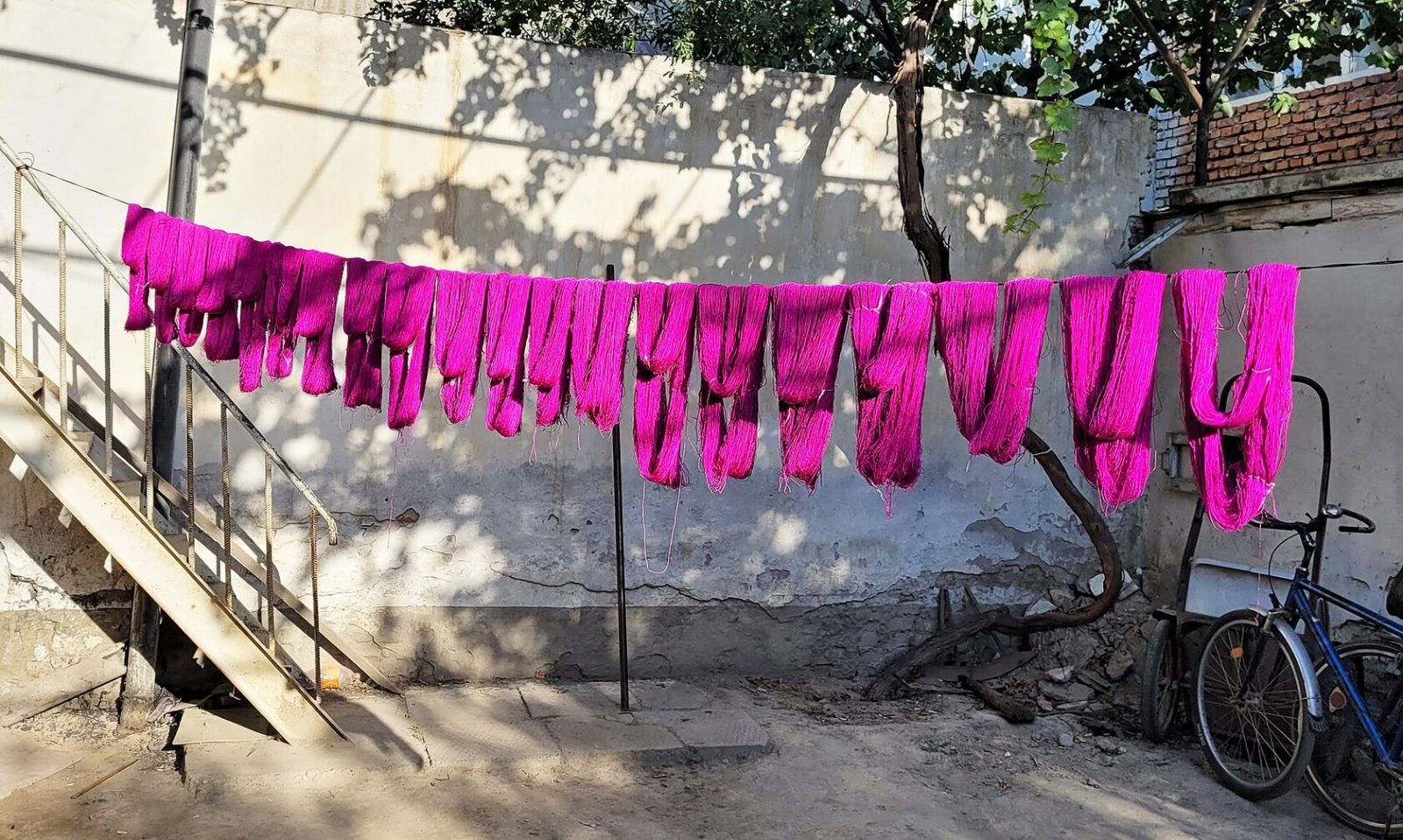
Margilan has long been known for silk and for trade on the ancient routes: Margilan silk was prized far beyond the region. The Yodgorlik factory shows the whole silk cycle live.
Silk, live
From raw material and threads to dyeing and weaving on hand looms. It is not just a shop but a clear story of skill and handwork.
Atlas and adras
Here they explain the ikat (abr) technique — the threads are dyed before weaving, producing the recognisable blurred pattern.
How the fabric is made
A tour of the factory follows the whole journey of the silk. First, silkworm cocoons are unwound in hot water, with the finest filaments joined into a single thread. Then the threads are bound in bundles according to the design and dyed: this is the abr, or ikat, technique, in which the pattern appears on the threads before weaving, which is why its edges look slightly blurred. Next come the wooden looms, and in a separate workshop silk carpets are knotted by hand.
Margilan, city of silk
Margilan is considered the capital of Uzbek silk and is one of the ancient towns of the Fergana Valley on the Great Silk Road. Family workshops still operate here, where the craft is passed down from generation to generation. Next to the factory it is worth looking into the local bazaar, where fabric is sold by the metre.
The silk capital of the valley
Margilan is one of the oldest towns in the Fergana Valley: it celebrated its 2,000th anniversary in 2007. For centuries the town lived on silk, raising silkworms, reeling cocoons and weaving fabrics that travelled along the Great Silk Road. Yodgorlik carries on this tradition, keeping the hand techniques that elsewhere gave way to machines long ago.
How to choose fabric
The factory shop sells atlas, adras, scarves and shawls. Hand-woven fabric costs more than machine-made: you can tell it by small irregularities in the pattern and a dense, lively texture. Natural silk feels cool to the touch and has a soft sheen. Fabric is sold by the metre, and the craftspeople will tell you how much you need for a dress or a robe. If in doubt, your guide will help you compare and avoid overpaying.
Practical information
Allow about an hour for the factory. The real work happens on weekdays during the day, so it is best not to plan your visit for weekends or holidays. There is a shop where you can buy fabrics, scarves and carpets directly from the makers. We confirm current opening hours before your trip.
SÁTRA tip
Allow time for the factory shop: you can buy fabrics directly from the craftspeople.
Where it fits in a trip
The Yodgorlik factory is part of our tour “Fergana Valley: Land of Artisans”, or build your own itinerary in the tour builder.
More in the Fergana Valley
Travelling to the Fergana Valley?
We will show you the region with a guide who knows every detail and plan an itinerary for your dates. Message our manager — we will answer your questions and find the right tour.
Fresh travel tips in our Telegram channel.